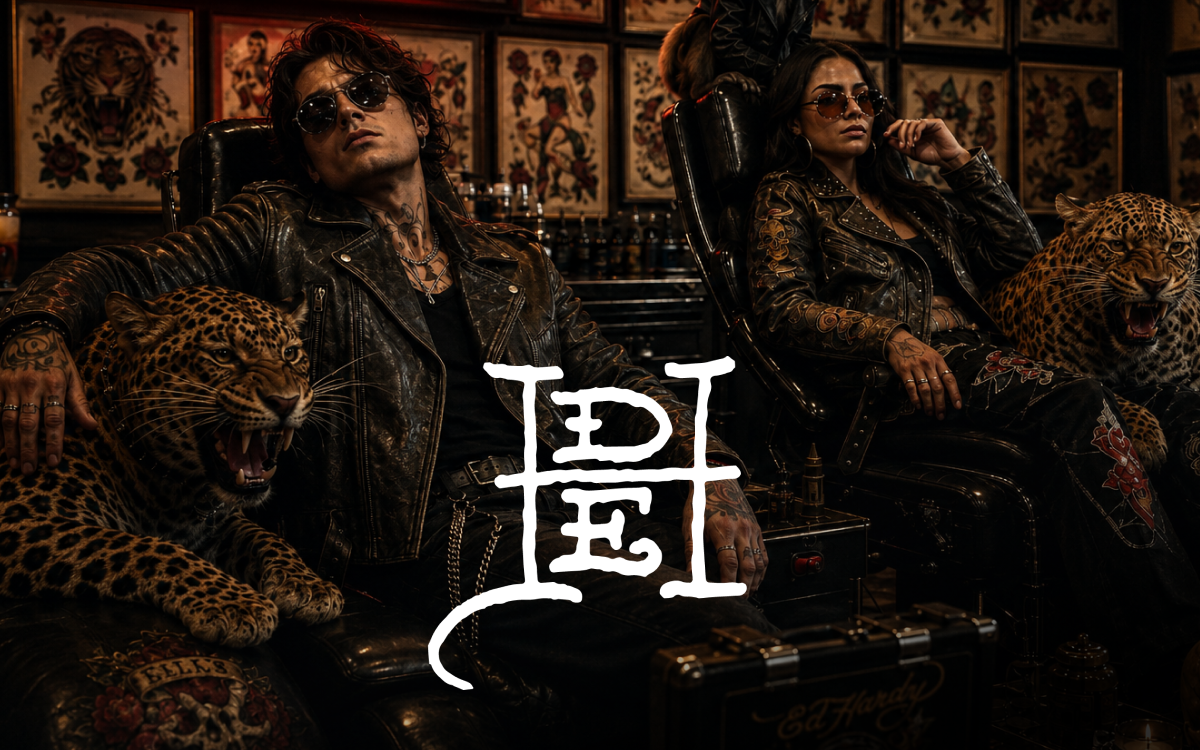
Ed Hardy brand revival by Jeremy Penn — tattoo art and punk attitude

03 / 05

Ed Hardy

Brand Revival · Cultural Repositioning · Apparel

Reclaiming the original voltage beneath the rhinestones and parody.

Client

Ed Hardy

Discipline

Brand Revival, Campaign Direction

Focus

Cultural Repositioning, Apparel

Director

Jeremy Penn

Quick Take

Ed Hardy wasn't just out of style — it was culturally radioactive. Jeremy Penn revived the brand by turning toxicity into tension: a comeback that was part confession, part provocation. No apologies. No rhinestones. No polished reinvention. The original tattoo-art mythology, restored. Disciplines: brand revival, cultural repositioning, art direction.

The Opportunity

Beneath the rhinestones, parody, and pop-culture exhaustion was something real: the work of Don Ed Hardy, a legendary tattoo artist whose sailor-style flash helped define a visual language of rebellion, danger, romance, and American underground culture. Ed Hardy had what most fashion brands try to manufacture: mythology, iconography, attitude, and a history too loud to fake.

The Challenge

Reintroduce Ed Hardy without pretending the collapse never happened. The brand had been overexposed, diluted, and turned into a punchline through rhinestone hats, celebrity excess, and endless licensing. The challenge: turn toxicity into tension. Bring the brand back with enough self-awareness to acknowledge the damage, enough confidence to laugh at it, and enough creative authority to remind people what made Ed Hardy dangerous in the first place.

The Approach

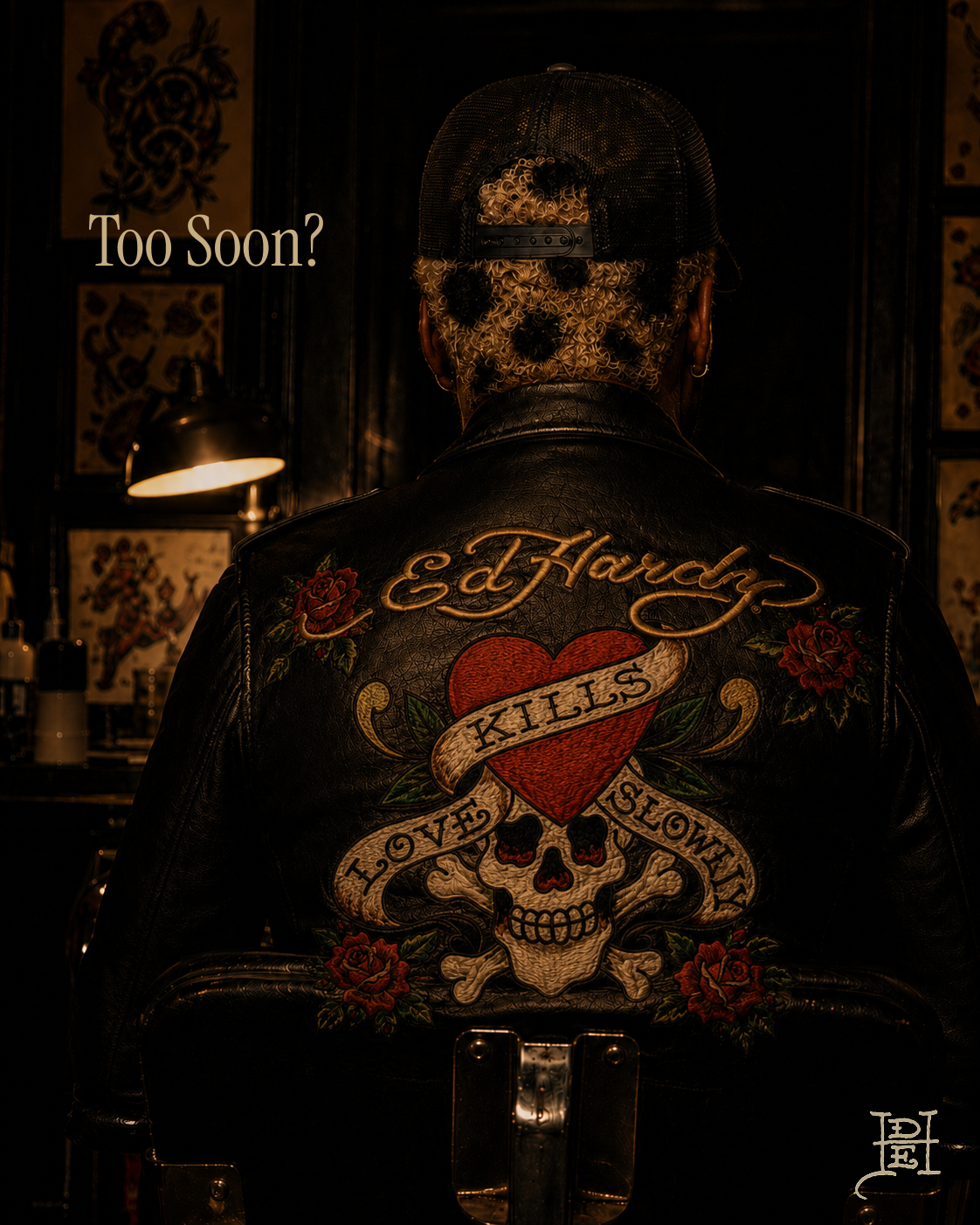
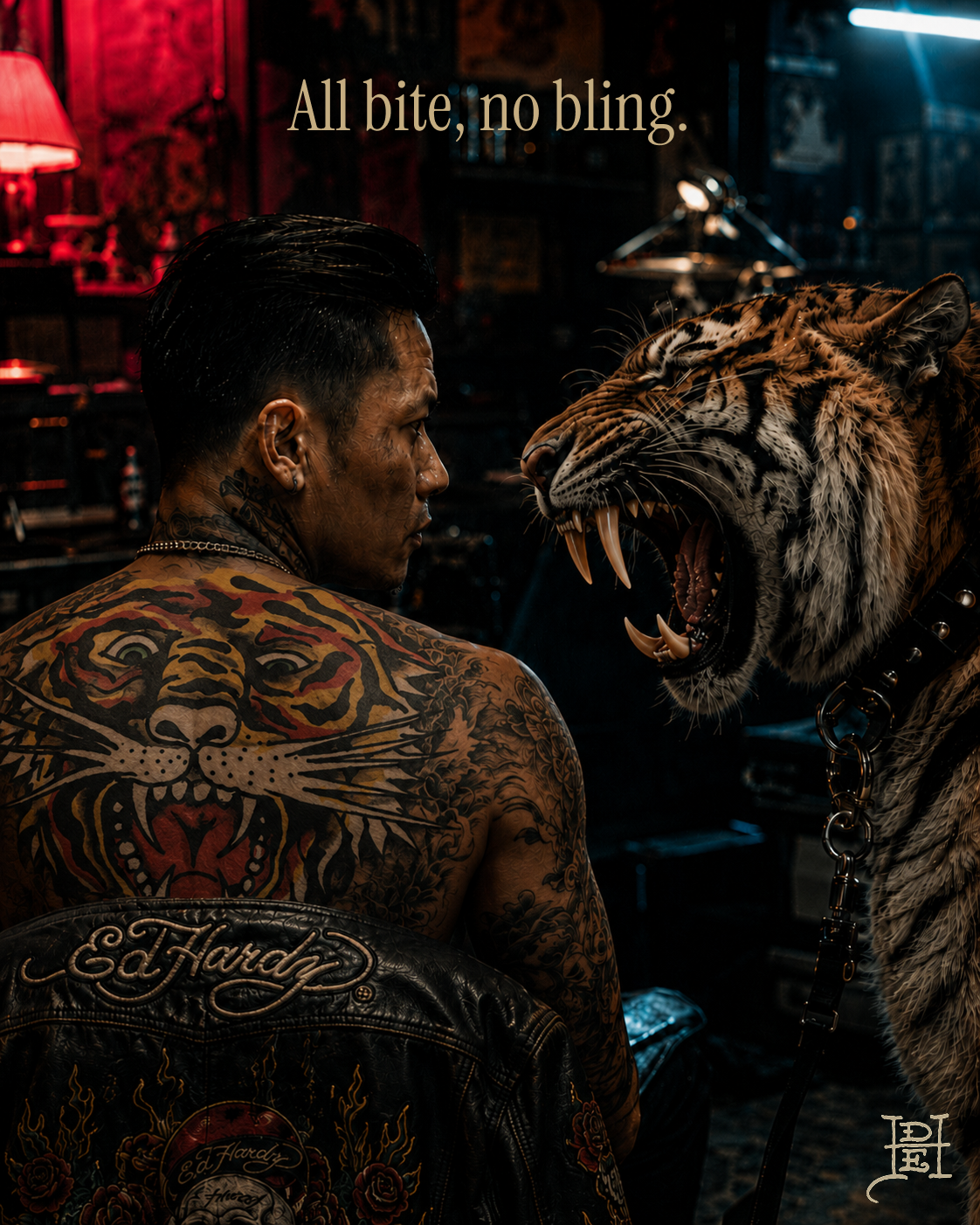
We went back to the source: tattoo art, punk attitude, sailor flash, hard edges, iconic silhouettes, and the raw mythology of a brand built on skin before it ever lived on clothing. Instead of hiding from the chaos, we used it. In true punk fashion, the comeback became part confession, part provocation. Yeah, that happened. We saw it too. Now we're back. No apologies. No rhinestones. No polished reinvention designed to please everyone. The visual world leaned into dark humor, sharp styling, edgy set design, and a take-it-or-leave-it attitude. We reframed Ed Hardy as both new and historic: a brand with scars, stories, and enough original fire to burn through the joke.
About This Project

How did Jeremy Penn revive the Ed Hardy brand?

Jeremy Penn revived Ed Hardy by returning to the original source: Don Ed Hardy's tattoo art, punk attitude, sailor flash, and the raw mythology of a brand built on skin before it lived on clothing. Rather than hiding from the brand's collapse, the strategy used it — turning toxicity into tension with a comeback that was part confession, part provocation. No apologies. No rhinestones.

What happened to Ed Hardy as a brand?

Ed Hardy was overexposed, diluted, and turned into a cultural punchline through rhinestone hats, celebrity excess, and endless licensing. The brand wasn't just out of style — it was culturally radioactive. The revival challenge was to turn that toxicity into tension: acknowledging the damage with enough confidence and creative authority to remind people what made Ed Hardy dangerous in the first place.

What is the Ed Hardy Too Soon campaign?

The Too Soon campaign was the central conceit of the Ed Hardy revival — a deliberate acknowledgment of the brand's chaotic past reframed as punk provocation. Rather than a polished reinvention, it leaned into dark humor, sharp styling, and edgy set design. The message: Yeah, that happened. We saw it too. Now we're back. A brand with scars, stories, and enough original fire to burn through the joke.
More Work

Lululemon brand repositioning case study, Jeremy Penn

01

Lululemon

Saks Fifth Avenue brand strategy case study, Jeremy Penn

02

Saks Fifth Avenue

Good Luck Dry Cleaners cultural retail concept case study, Jeremy Penn

04

Good Luck Dry Cleaners

Degen Arcade gamification engine case study, Jeremy Penn

05

Degen Arcade

An idea isn't finished
until someone feels it.

Senior Creative Director · New York

Get in Touch